Jamie
Jamie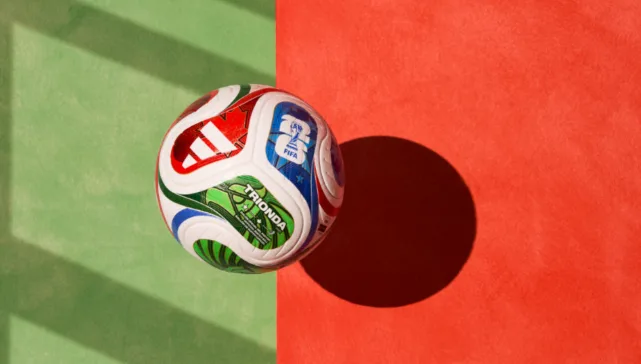
The 2026 FIFA World Cup was not just a show of the pinnacle of soccer. It was also a live laboratory for connected hardware with the Adidas’ TRIONDA official match ball.
Inside its four-panel shell was a lightweight inertial measurement unit able to communicate motion data at about 500Hz the second time a World Cup ball has carried this technology, following the Al Rihla in Qatar 2022, but with a redesigned side-mounted sensor replacing the earlier center-mounted system , allowing officials to have a very accurate record of when and how the ball was in motion.
VAR offsides calls traditionally have relied on the officials picking a frame from a video, assigning body positions and drawing lines. Those steps break the momentum and open the door to quarrels about the selected moment.
With smart-ball technology now shown to be capable of capturing contact within milliseconds of occurring, the focus has now turned to the changes coming to the Premier League and whether the top flight in England will move towards implementing embedded smart-balls into its optical tracking system.
Decoding TRIONDA: How connected ball tech works
The main breakthrough of TRIONDA is its Connected Ball Technology, developed with Munich-based sensor specialist Kinexon. The sensor samples approximately 500 times per second and records acceleration and 3D motion, before sending it to the officiating system.
That stream assists software in determining the precise kick point for an offside review, which can be challenging for normal broadcast footage if the boot and ball are in contact between frames.
Disappearance of the hardware inside the product is desired. It is lightweight and evenly mounted, maintaining flight, touch and stability. At the same time, TRIONDA’s 4 panel design and the textured surface are self-regulating. It’s more like a sporting item with the industrial IoT device inside, and less of a gimmick.
Connected-ball data is used in conjunction with roof mounted optical cameras for FIFA events. Previous versions would monitor up to 29 relevant points on each player 50 times a second, including the position of limbs and ball and the offside line. The 2026 set up took that one step further and used the sensor’s contact time to sync the digital pitch to when a pass was played.
The Premier League blueprint: The transition to semi-automated offsides
England has already completed a lot of the technological “bridge”. The Premier League launched Semi-Automated Offside Technology in April 2025 and implemented it for the 2025/26 season.
Genius Sports uses approximately 30 high resolution smartphone-based cameras in each stadium to capture thousands of points on the surface of every player and recreate the action in three dimensions on their GeniusIQ platform.
The system automatically recognizes the kick point, the player geometry involved and creates an offside plane and a broadcast visualization, which replaces the older workflow.
Post-League data indicated that SAOT has reduced the time of an offside incident by an average of approximately 27 seconds since it was introduced. It’s not fully automated refereeing, as the VAR still has to validate that “event”, check for interference and confirm the decision.
The only thing that’s missing is the ball. Optically tracked by GeniusIQ without an inbuilt transmitter or with FIFA’s connected-ball model for a direct motion signal.
The combination of the two might help make ambiguous kick points clearer, but would still necessitate league, technology provider, and official ball supplier certification at each location.
Beyond offsides: Resolving the invisible handball dilemma
A 500Hz IMU can capture the smallest acceleration variations that a camera might not be able to see, such as those in the touch and deflection of the object. In theory it could be used to flag when a VAR is in contact but cannot be seen from the sidelines, or to determine if the ball altered its direction before hitting another player.
The chip, however, isn’t an acoustic microphone, and alone it can’t tell if contact was made by a hand, chest, jersey or boot. In addition to arm position, proximity, movement, the Laws of the Game should be considered when making handball calls.
Although there is a good possibility of finding some evidence, connected data would simply lessen the uncertainty and not eliminate human interpretation.
The technological hurdles to universal European adoption
FIFA is a well-managed organisation with a long-term association with Adidas. There are separate commercial contracts for domestic competitions.
The Premier League has made the switch to PUMA for 2025/26 and its 2026/27 STELLAR NITRO ball is designed for “airflow, balance and stable flight” rather than with a claimed connected sensor. Any of these changes would involve re-manufacturing, re-testing, re-charging, re-pairing, re-replacing and re-security processes.
Infrastructure is another constraint. Previously FIFA’s Qatar 2022 setup used 12 dedicated roof cameras tracking up to 29 points on each player 50 times a second; for the 2026 World Cup, FIFA upgraded to 16 high-resolution cameras per stadium, collecting roughly 150 million data points per match.
Genius Sports claims to exhibit approximately 30 cameras per stadium in England. In addition to the lenses, clubs require mounts, networking, calibration, redundancy, power, processing, trained operators and consistent performance in all promoted grounds.
Interoperability can be the most challenging issue. A smart ball needs to be able to “talk” to the tracking software, VAR systems, broadcasters, and competition databases in a reliable way without creating conflicting standards between countries.
This makes it more likely that Europe will embrace connected balls on a competition-by-competition basis than make a one-size-fits-all switch.
Data-driven pitches: What smarter balls mean for the future game
The course has been set. Soccer is becoming an environment where the ball, cameras, player models and officiating software are all on the same time axis.
All of the infrastructure can be used to generate kick speed, trajectory, touch maps and tactical spacing for television graphics, coaching platforms, fan applications and sports data analysis.
The quicker the confirmation of the offside, the less time that live markets will be suspended, and it will also help with timestamping goals, assists, and attacking events, which is a better experience for bettors. It will not make outcomes predictable, but cleaner event data can sharpen models and prevent as many errors due to delayed decisions.
The use of connected ball technology should be expanded to additional European competitions but would be dependent on partnerships, certifications and costs.
Until embedded sensors are commonplace on domestic match balls, fans can keep tabs on form, tactical trends, injury reports and expert predictions via established analytical tools.
The hardware has been demonstrated in the World Cup. Europe’s challenge is to now make tournament level innovation into reliable weekly infrastructure.