Jamie
If in the past, people who gambled had to first go to brick-and-mortar casinos and later sit in front of their computer to play, now things have changed immensely. As technology advanced, casinos couldn’t stay behind, as player requirements also evolved and they wanted something more.
Mainly, it’s all about the flexibility that comes with playing on a phone, no matter where the player is: on vacation, on their way to work or even at home.
This article will address precisely how online gaming has adapted for mobile devices, including layouts, loading times, session lengths, special zones during gameplay and how the mobile-first approach has generated a large share of revenue.

Portrait layouts
Now, with mobile gambling, providers didn’t just transform the slots into miniaturized desktop replicas, but they’ve redesigned them to be mobile-first and touch-native for one-handed portrait play.
So, precisely, they didn’t just shrink a wide screen to fit a phone, but they’ve built the games around how people naturally hold and interact with smartphones.
If traditional slots relied on a wide, horizontal frame with side panels and sprawling control bars, now games displayed on smartphones require rethinking the entire visual composition.
The focus is on the central vertical column, with the reels occupying the biggest bulk of the screen, and the supporting elements, like animations, multipliers or certain bars, are usually at the top of the reels. The visual elements are bolder, and the details of the slots hide in side panels.
Thumb zones
From a user experience perspective, providers had to recreate the games in such a way that users can play from an area they can comfortably reach with their thumb while holding the device in one hand. This aspect is a critical one for mobile gambling because while playing, the user has to tap the screen repeatedly in short bursts.
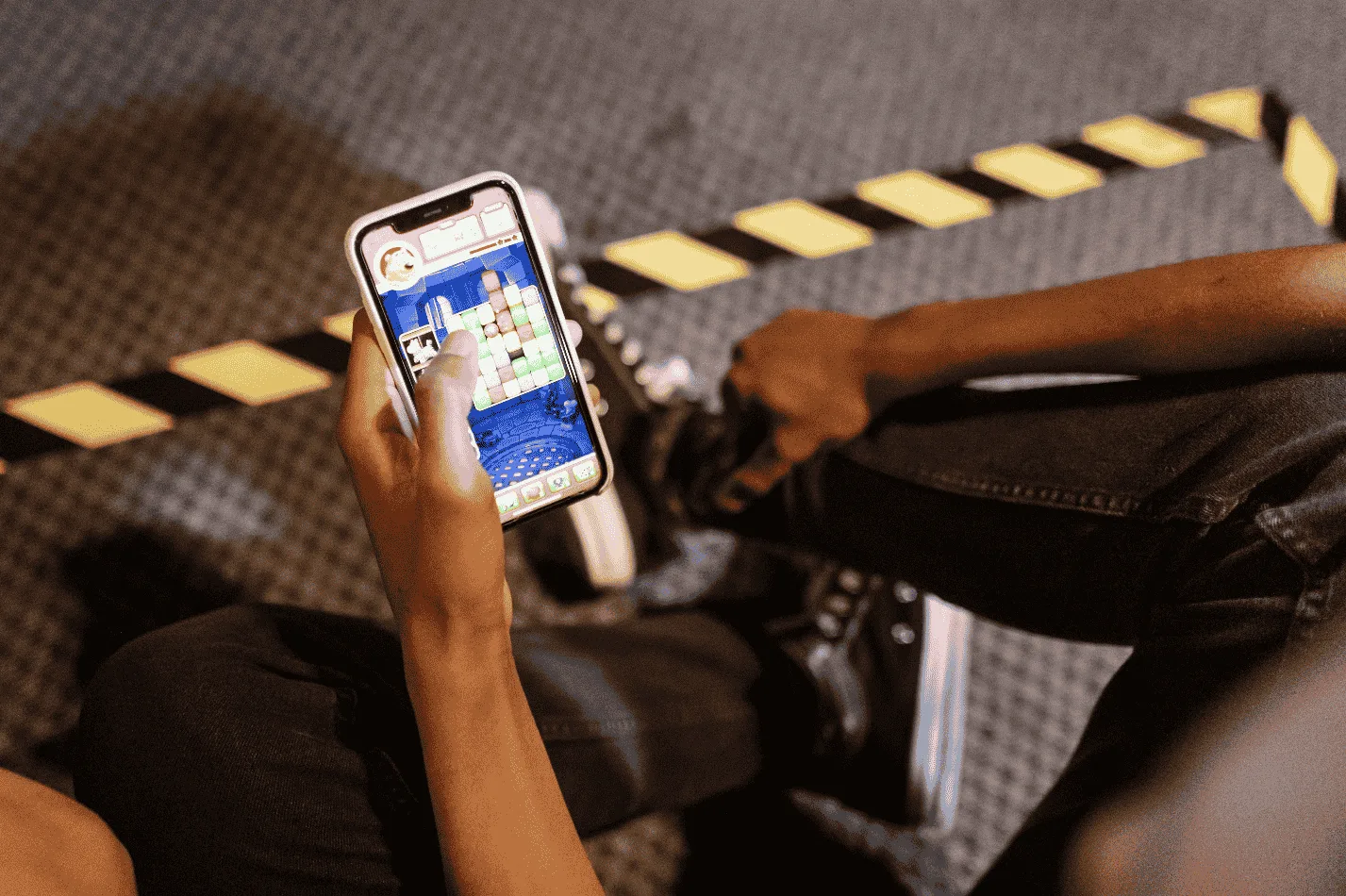
That is why buttons such as the spin one, the ones with which players set the bets, and the turbo spin sit at the bottom of the screen, eventually to the right.
In the middle zone sit the reels and the buy bonus button if it exists (or any other extra feature button), and in the hard-to-reach zone usually sit buttons that one wouldn’t access that often.
Shorter sessions
The main reason the gaming sessions are shorter is that playing on the phone means the user doesn’t have to set aside a specific time slot to sit in front of the laptop for gambling.
They can play from anywhere, at any time, because the phone is a device that people carry everywhere, almost tied to the hand. Being always within reach, they can open the casino while standing in line to buy something, for example.

But this is exactly one of the reasons sessions get shorter. The outside environment can interrupt the game if the person has reached the front of the line and now has to pay. Notifications could be another reason that distracts players and leads them to leave the game.
Then, there is also the fact that modern slots load faster; there is frictionless access to the casino through biometric logins and saved data, or the casino might push people towards shorter sessions with daily logins and missions for certain prizes.
Faster load requirements
Building on the data mentioned earlier, which shows that sessions are becoming shorter, players don’t want to waste that short time waiting for the game to load.
They expect instant gratification, and if that doesn’t happen, they will most probably abandon the game and lose the intention to play at that casino.
Because playing outside the house comes with unpredictable network conditions and other setbacks, providers have optimized the games, implementing lightweight frameworks that run natively in mobile browsers; they combined graphics and compressed files to shrink download sizes, and the games load the base reels and spin button first so the player can already start playing while the other elements load in the background.
Mobile gaming now generates around 56% of revenue
According to data gathered by SlotsCalendar, many gamblers who use bonus codes to play at online casinos access these offers on mobile devices.
As specified so far, playing on the phone is a quick way to get dopamine, giving people the chance to play anytime they want and not having to wait until they get home.
This comes as no surprise, since phones represent the primary gaming device for 68% of players globally. Moreover, as shown in a report by Google’s CEE apps lead, Mariusz Gąsiewski, mobile will account for 56.6% of global games revenue in 2026. This is more than double the percentages for console and PC.
Conclusion
With all of that being said, mobile gaming has already taken its place as the favorite way of gambling, so player expectations will only increase. Technology also advances, and since casinos and game providers want to succeed, they have to stay on top of the changes.
The industry giants, of course, will do everything in their power to stay relevant, but players need to remind themselves that no matter how fast and easy gambling becomes, practicing responsible gambling remains more important.