Jamie
JamieMobile technology has transformed the everyday task of finding local services into a fast, intuitive, and highly personalized process. In 2026, smartphones and mobile solutions have become the primary channel through which users discover restaurants, services, and entertainment nearby.
Below is a closer look at the reasons behind this shift and real-world examples of how mobile innovation is changing the way people search for the services they need.
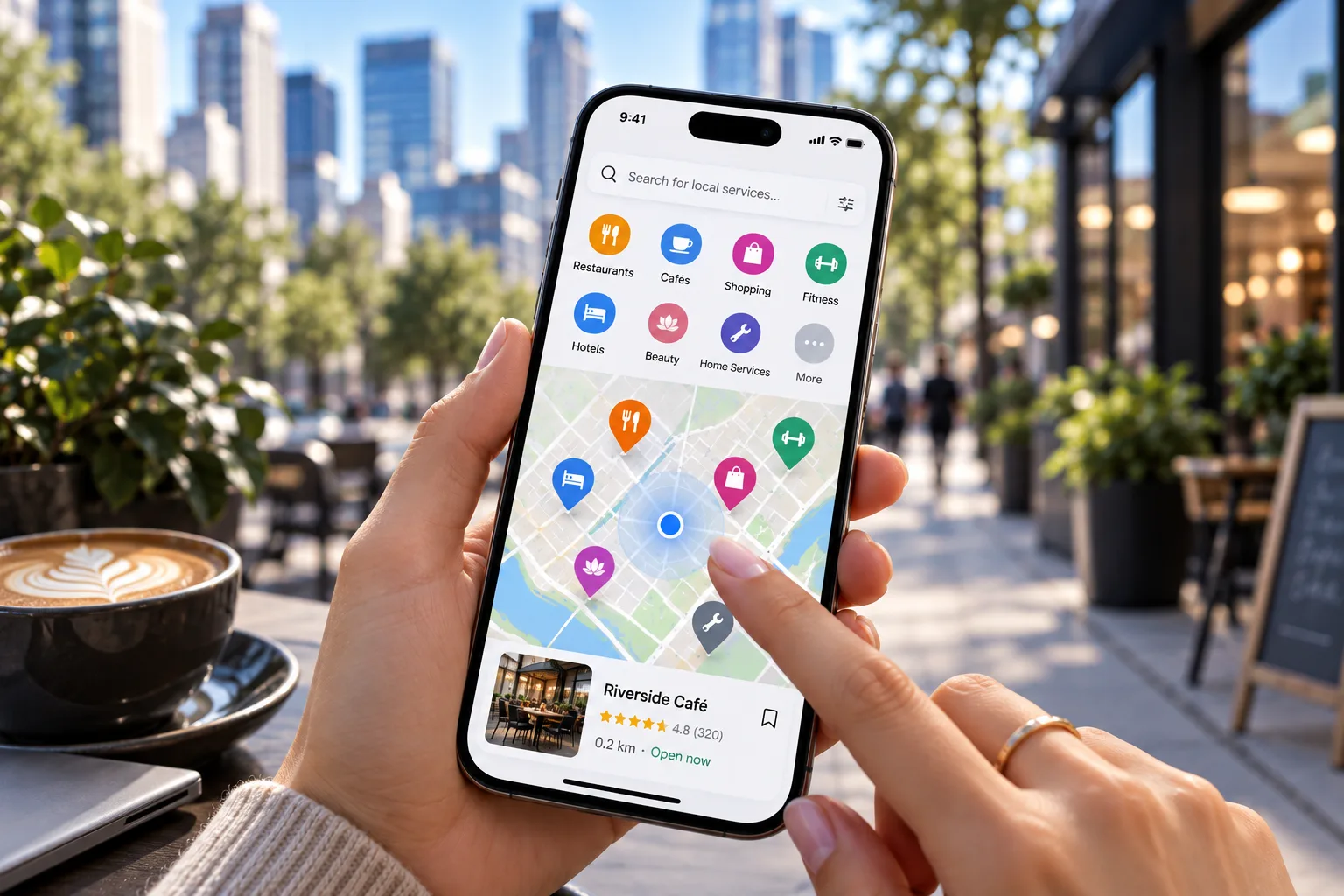
Real-Life Examples: Local Service Discovery with Mobile Tech
In practice, mobile technology saves time and simplifies the entire process of finding and booking local services. Tourists use app recommendations to locate nearby museums, while city residents search for the highest-rated cafés in their area.
Car-sharing, taxi, cleaning, and repair services combine payment, quality ratings, and customer feedback within a single mobile interface.
Modern mobile solutions also make it easier to find smaller and more specialized service categories. For example, mobile platforms allow users to discover specific services such as dallas slixa through filters, rating systems, and geolocation settings that help narrow down suitable options more efficiently. This approach is particularly relevant in large cities, where convenience and time savings play an important role in user decisions.
The Rise of Mobile Technology in Everyday Life
In 2026, the number of smartphone users worldwide has surpassed 6.8 billion. More than 80% of adults use mobile devices every day to access information, communicate, and order services. According to Statista research, people check their smartphones an average of 124 times per day, with a significant share of these interactions related to quick searches and navigation.
Mobile internet has become a key factor in this transformation. Faster connection speeds and easy access to services on the go have made desktop computers less important for local searches. People order food, look for car repair shops, and read reviews of doctors while commuting or standing in line.
Mobile Search and Local Discovery: Trends and Tools
Why has mobile search become dominant for local services? According to Google data, more than 73% of local searches are now carried out on smartphones. The main reason is instant accessibility combined with the ability to search based on location.
Geolocation technology can identify a user’s position with an accuracy of just a few meters. Mobile maps such as Google Maps and Apple Maps are integrated with business databases, allowing users to see nearby cafés, salons, warehouses, their current activity levels, and customer ratings within seconds.
Voice assistants such as Siri and Google Assistant have become another convenient tool for finding services. Around 61% of users already rely on commands such as “find a pharmacy near me.”
Service aggregators also take into account preferences, previous visits, and reviews to provide more personalized recommendations. As a result, mobile search is becoming both faster and significantly more relevant.
The Impact of Mobile Technology on Local Businesses
For businesses, having a strong presence across mobile channels has become a necessity rather than a luxury. According to BrightLocal, 78% of users make a purchase or book a service after carrying out a local mobile search. Businesses listed on maps and popular apps gain access to a highly relevant stream of potential customers.
Integrated booking, online payment, and review features also make the decision-making process much faster. Users can check availability, read feedback, and compare ratings within minutes. Restaurants that offer mobile table reservations through aggregators, for example, report increases in bookings of up to 24%.
For beauty services, repair shops, delivery companies, and similar businesses, appearing prominently in mobile search results is especially important. Easy access to accurate information builds trust and helps attract new customers without relying as heavily on traditional offline advertising.
Privacy and Security Concerns in Mobile Local Search
The growth of mobile local search has also introduced new risks. Services often request access to location data, contacts, and search history in order to personalize the user experience, which can potentially expose sensitive personal information.
In 2026, privacy requirements continue to evolve through regulations such as the GDPR, the CCPA, and comparable frameworks introduced in other regions. Even so, users remain concerned about location tracking and personal data leaks.
Effective ways to improve security include choosing apps with transparent privacy policies, disabling permanent location access, enabling two-factor authentication, and keeping operating systems up to date.
According to a Norton report, 40% of users already use a VPN when searching for services through mobile aggregators in order to reduce the risk of data interception.
The Future of Mobile-Based Local Service Discovery
The direction of mobile search over the next few years clearly points toward greater personalization and wider adoption of artificial intelligence.
AI algorithms already analyze multiple factors, including the time of day, previous choices, and nearby events, to display the most relevant offers for each individual user.
With the broader rollout of 5G and the commercial adoption of augmented reality technologies, users may soon move beyond simply viewing locations and services on a map. Instead, they could receive contextual information directly through their smartphone camera.
For example, a system could instantly highlight a venue’s rating or available promotions when the user points their device at a building.
Voice and visual interfaces, social recommendations, and sustainability-related filters are also expected to become standard features.
At the same time, privacy and security concerns will remain important, encouraging companies to place even greater emphasis on personal data protection and transparent information handling.
Ultimately, mobile technology is redefining local discovery by making it faster, more personalized, and closely connected to users’ immediate needs.
As smartphones continue to integrate AI, geolocation, voice search, and augmented reality, the gap between searching for a service and taking action will become even smaller.
At the same time, users will expect greater transparency, stronger privacy protections, and more control over how their data is collected and used. Businesses that combine convenience with security and accurate information will be better positioned to earn trust and remain visible in an increasingly competitive mobile-first environment.