Jamie
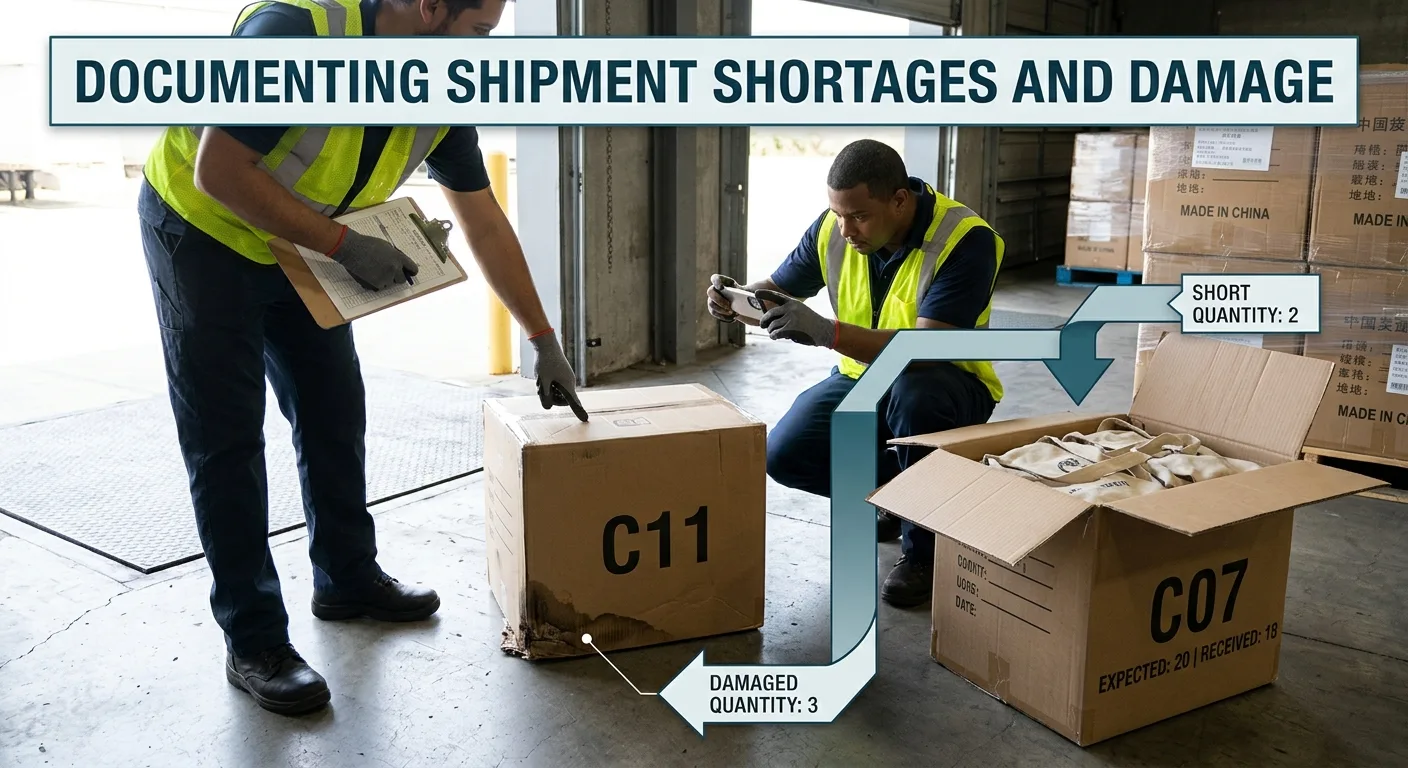
A buyer expects 240 canvas tote bags from a supplier in China, packed in 12 cartons of 20. All 12 cartons arrive. Carton C07 contains 18 bags, and three bags in carton C11 have water stains.
The warehouse has 238 bags on hand and 235 it can release into stock. The supplier needs the carton numbers and both counts to investigate the two missing bags and the three damaged ones.
Record the condition before opening the cartons
Compare the carton count on arrival with the delivery paperwork. Check the carton numbers against the packing list, then photograph any dents, moisture, or broken seals before opening the affected cartons.
Take a wide shot showing where the carton sat on the pallet, plus separate close-ups of the label and the affected area. For C11, include the damp bottom panel.
Save the delivery record with the photos and note who checked the shipment and when. If the carrier’s paperwork lists a delivery reference and the supplier uses a different shipment number, keep both in the receiving log. Either party can then locate the same delivery from its own records.
Count the units by SKU and carton
Record the expected quantity, the physical count, and the usable quantity. For C07, that means 20 expected, 18 received, and 18 usable.
For C11, it means 20 expected, 20 received, and 17 usable. Check the other cartons for the same SKU before reporting the shortage. A bag packed in the wrong carton changes two carton counts even when the shipment total is correct.
If the order ships in batches, use the packing list for the delivery you are counting. Ask the supplier to confirm the quantities scheduled for later shipments so the warehouse can distinguish the remaining order balance from a shortage in this delivery.
Document what you find inside
Photograph the contents as you open the carton. Show where the affected units sat and how they were packed. If the stained bags are in the bottom layer, photograph them in place before lifting them out.
Hold the affected units in a labeled area and retain the original packaging for review. Name the photos with the carton number and what they show so the supplier can match each image to the right item.
Add the held quantity and storage location to the receiving record. If procurement needs a second inspection or a close-up of an individual bag, the warehouse can find the affected stock from the carton number.
Give the supplier a report they can check
Put the purchase order number in the subject line. Include the delivery date, SKU, carton numbers, and the count for each discrepancy.
Attach the packing list and labeled photos. Ask the supplier to check the packing records for C07 and share any dispatch photos for C11.
Give them a date to respond so your team knows when to follow up. If the supplier requests a recount, agree on the SKU and cartons to check. Add the result to the original report so both sides are using the same numbers.
If the supplier sends replacement bags with a later order, ask them to list the replacements separately on the new packing list and reference the original order. Receiving can then match the bags to the open report when they arrive.
Agree on the reporting process before dispatch
When you contact suppliers in China about a new order, ask who handles shortages and damage, when they need an initial report, and which records they use to review it.
Give your warehouse those instructions with the packing list. If the full count will take several days, agree on how to send an initial report with the cartons and damage already documented, then follow up with the final count.