Jamie
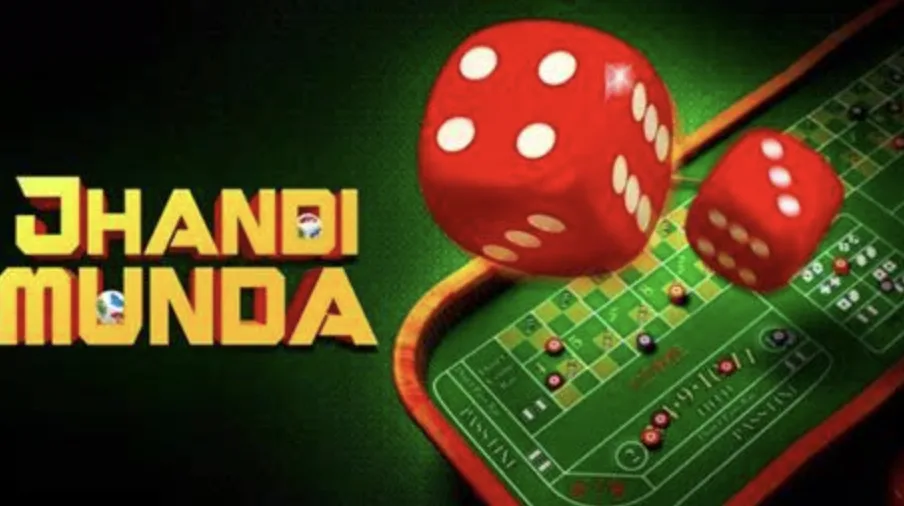
The RTP of Jhandi Munda online cash game depends on which digital version you are playing. There is no single RTP that applies to every game called Jhandi Munda.
TaDa Gaming officially lists 96.00% RTP for its Jhandi Munda casino game. Its game sheet also shows six symbol dice, the Extra Pay feature, a €1 minimum bet, €400 maximum bet and €80,000 maximum payout. TaDa’s current product page lists the maximum win as 200×.
JILI Games also publishes a Jhandi Munda title. Its official page confirms six dice, the familiar club, diamond, heart, spade, flag and crown symbols, zero paylines and an Extra Odds feature.
However, JILI’s public page does not currently state an RTP. Some operator listings show 97%, but that number should be checked inside the actual game before being treated as the RTP of the version you are playing.
This distinction is important for real-money play. Two games can share the Jhandi Munda name while using different providers, paytables and mathematical settings.
What Is the RTP of Jhandi Munda Online Cash Game?
For the TaDa Gaming version, the answer is clear:
RTP: 96.00%
This figure comes directly from TaDa’s game sheet.
A 96% RTP corresponds to a theoretical house edge of 4%.
The calculation is simple:
100% – 96% = 4%
This does not mean a player will lose exactly 4% of every deposit.
RTP is a long-term statistical measurement. A short session can finish with a large profit, a small loss or a complete loss of the amount used.
The percentage becomes meaningful only over a very large number of rounds.
Why Jhandi Munda RTP Can Differ by Provider?
Jhandi Munda is a traditional dice-game concept rather than one universal digital product.
Different developers can create their own versions.
TaDa Gaming released its version on October 23, 2024 and officially publishes a 96% RTP and 200× maximum win.
JILI also has a version with six dice and the same six basic symbols. JILI’s public product page currently does not give an RTP figure.
This means a search result saying “Jhandi Munda RTP 97%” should not automatically be applied to TaDa’s game, and TaDa’s 96% should not automatically be applied to every JILI table.
The provider name matters.
Jhandi Munda Game Facts at a Glance
| Feature | TaDa Gaming Jhandi Munda |
| Game type | Table and Card / Dice |
| Release | October 23, 2024 |
| Dice | 6 |
| Symbols | 6 |
| RTP | 96.00% |
| Maximum win | 200× |
| Main feature | Extra Pay |
| Minimum bet in game sheet | €1 |
| Maximum bet in game sheet | €400 |
| Maximum monetary payout | €80,000 |
| Technology | HTML5 |
TaDa confirms the RTP, betting range, Extra Pay feature and maximum monetary payout in its official material.
Currency limits can change between casinos, so the amounts shown by the operator should take priority.
What Does 96% RTP Mean?
Imagine that players collectively wager 1,000,000 units across a very large sample.
At a theoretical 96% RTP, the model would return around 960,000 units to players.
The theoretical difference would be 40,000 units.
That does not tell you what happens to one 100-unit bet.
A player may bet 100 and lose all of it.
Another player may receive a payout far larger than the stake.
RTP describes the average mathematical return built into the game, not an individual result.
It also does not mean the chance of winning one round is 96%.
How Jhandi Munda Works
Jhandi Munda uses six dice.
Instead of numbers from one to six, each die displays six symbols.
Before the dice are rolled, the player selects one or more symbols.
The six dice are then rolled together.
The result depends on how many times the selected symbol appears.
TaDa describes the game as a digital version of the classic Indian dice game and confirms that all six dice use clubs, diamonds, hearts, spades, flags and crowns.
The basic round is therefore very short.
Choose a symbol, place a stake, let the six dice roll, then count the matching symbols.
The Six Jhandi Munda Symbols
The standard symbols are:
- Club
- Diamond
- Heart
- Spade
- Flag
- Crown
Every die contains one face for each symbol.
Assuming fair dice, every individual symbol therefore has a 1 in 6 probability of appearing on each die.
The Flag is associated with the word Jhandi, while the Crown is associated with Munda.
The game is also closely related to Langur Burja, a name commonly used for similar versions in Nepal.
How Often Does Your Selected Symbol Appear?
Because six independent dice are rolled and each has six possible faces, the probability of your chosen symbol appearing a particular number of times can be calculated directly.
| Matches on 6 dice | Approximate probability |
| 0 | 33.49% |
| 1 | 40.19% |
| 2 | 20.09% |
| 3 | 5.36% |
| 4 | 0.80% |
| 5 | 0.064% |
| 6 | 0.0021% |
This table explains an important feature of Jhandi Munda.
Your selected symbol appears zero or one time in about 73.68% of rolls.
Two or more appearances happen only about 26.32% of the time.
Six identical symbols are extremely rare. The probability is about 1 in 46,656.
Jhandi Munda Payout Table Explained
TaDa’s game uses a payout ladder based on the number of matching dice.
Current game information shows the following base structure:
| Matching dice | Base return |
| 0 | Loss |
| 1 | Loss |
| 2 | 2.5× |
| 3 | 5× |
| 4 | 10× |
| 5 | 20× |
| 6 | 100× |
The published game screen and current game references use this progression.
Suppose you place ₹100 on the Crown.
If two Crowns appear, a 2.5× return would equal ₹250.
If three Crowns appear, a 5× return would equal ₹500.
If all six dice show Crown, the base 100× result would correspond to ₹10,000.
Extra Pay can increase certain outcomes further.
How Extra Pay Affects the RTP?
Extra Pay is important because the normal payout ladder alone does not explain TaDa’s full 96% RTP.
Using the standard probabilities and base payout table, the ordinary payout ladder produces a theoretical return of roughly 86.56% before the additional Extra Pay value is included.
TaDa’s official total RTP is 96%.
The difference comes from the additional value added by Extra Pay.
TaDa describes Extra Pay as a random multiplier feature. Its promotional information states that enhanced multipliers can reach as high as 200×.
This is why RTP calculations based only on the ordinary 2.5×, 5×, 10×, 20× and 100× ladder can underestimate the full game return.
The bonus mechanic is part of the mathematics.
RTP vs House Edge
RTP describes the theoretical amount returned to players.
House edge describes the theoretical amount retained by the game over the long term.
For TaDa Jhandi Munda:
RTP = 96%
House edge = 4%
The two figures add to 100%.
This does not mean the casino takes 4% from each successful bet.
The edge is created by the relationship between probabilities and payouts across all possible results.
RTP vs Hit Probability
Another common mistake is confusing RTP with hit rate.
A 96% RTP does not mean 96% of symbol bets win.
For one selected symbol, two or more matching dice appear only around 26.32% of the time with six fair dice.
Under the standard TaDa payout ladder, zero or one appearance does not produce a base win.
The game can still have 96% RTP because less frequent successful results pay multiples of the original stake and Extra Pay contributes additional value.
Win frequency and average financial return are different measurements.
Why One Match Can Still Lose?
Traditional descriptions of Jhandi Munda sometimes use different payout rules.
This can create confusion online.
In TaDa’s digital version, the base payout starts when your chosen symbol appears at least twice.
If it appears only once, the ordinary symbol bet does not produce the 2.5× or higher base return.
This matters because one match is actually the most common individual outcome, occurring about 40.19% of the time.
Players familiar with other dice games should therefore check the paytable rather than assuming that one matching symbol automatically pays.
Jhandi Munda Maximum Win
TaDa’s current game page lists a maximum win of 200×.
Its official game sheet also gives a maximum monetary payout of €80,000 for the displayed configuration.
These figures describe different limits.
The 200× figure is a multiplier.
The €80,000 amount is a monetary ceiling shown in the provider’s game sheet.
If an operator uses another currency or different table limits, the visible cash limits may change.
The maximum win should also not be confused with RTP.
A 200× maximum says nothing about how often that result occurs.
Does Betting on More Symbols Improve RTP?
Betting on several symbols can change how often at least one part of your total bet produces a return.
It does not automatically improve the mathematical RTP.
Suppose you bet equally on three symbols.
You now have more possible ways to receive a winning payout, but you are also risking three separate stakes.
The important figure is the total amount wagered.
Placing ₹100 on one symbol means ₹100 is exposed.
Placing ₹100 on four symbols means ₹400 is exposed.
Covering more of the table can make results feel smoother, but it does not turn a negative-expectation game into a positive-expectation one.
Can Previous Results Predict the Next Roll?
TaDa’s interface can show recent symbol frequencies.
These percentages describe previous outcomes.
They do not guarantee the next roll.
TaDa’s promotional description refers to hot and cold symbols and lets players view historical frequencies.
However, with independent fair dice, a symbol that appeared frequently in previous rounds does not become more likely because it is “hot.”
A symbol that has not appeared for several rounds is not automatically “due.”
If the dice are generated independently, each face still has the same probability on the next roll.
History can be interesting to view, but it should not be confused with a prediction system.
RTP in Demo vs Real-Money Play
For the same configured game, demo and real-money versions should use the same basic rules and mathematical model.
The difference is the balance being used.
Demo mode uses virtual credits.
Real-money mode uses an actual cash balance.
A successful demo session does not increase the chance of success after switching to real-money play.
Likewise, a poor demo session does not mean a better sequence is due.
Demo mode is most useful for checking the paytable, Extra Pay feature and betting controls before financial risk is involved.
How to Check the RTP Before Playing
The safest approach is to open the exact game you plan to use.
Look for:
- Game Info
- Help
- Rules
- Paytable
- RTP
If the game says 96%, use 96%.
If a JILI version offered by an operator shows 97%, then that figure applies to that specific implementation rather than TaDa’s product.
This is especially important because JILI’s current public provider page confirms the game and its mechanics but does not publish a public RTP percentage.
Provider and version should always be checked before quoting an RTP.
Common Jhandi Munda RTP Mistakes
The first mistake is assuming that every Jhandi Munda game has the same RTP.
They do not necessarily use the same provider or paytable.
Another mistake is treating 96% RTP as a 96% chance of winning.
It is a theoretical return percentage.
Players also confuse the 200× maximum with normal payout frequency. A high maximum does not mean large wins happen regularly.
Another mistake is ignoring Extra Pay when trying to calculate TaDa’s RTP from the base payout table.
Finally, recent symbol percentages should not be treated as a predictor. Historical results do not guarantee the next dice outcome.
Frequently Asked Questions About Jhandi Munda RTP
What is the RTP of Jhandi Munda?
TaDa Gaming officially lists 96.00% RTP for its Jhandi Munda.
Does JILI Jhandi Munda also have 96% RTP?
Do not assume so. JILI’s public provider page currently does not publish an RTP. Some operator listings show 97%, so check the actual game information.
What is the house edge at 96% RTP?
The theoretical house edge is 4%.
Does 96% RTP mean I win 96% of rounds?
No. RTP measures theoretical long-term financial return, not win frequency.
How many dice are used?
Six dice are rolled.
What symbols are on the dice?
Club, diamond, heart, spade, flag and crown.
How many matches are needed to win in TaDa Jhandi Munda?
The standard base payout ladder starts at two matching dice.
What does two matching symbols pay?
The commonly displayed base return is 2.5×.
What is the maximum base payout?
Six matching symbols produce a base 100× return under the standard TaDa ladder.
What is the maximum win?
TaDa currently lists a 200× maximum win once its additional game mechanics are included.
What is Extra Pay?
Extra Pay is TaDa’s random payout-enhancement feature. It contributes additional value beyond the normal symbol payout ladder.
Can hot symbols predict the next result?
No reliable method can guarantee the next dice result from previous symbol frequencies.
Conclusion
The RTP of Jhandi Munda online cash game cannot be answered with one number unless the provider is identified.
For TaDa Gaming’s Jhandi Munda, the official RTP is 96.00%. That corresponds to a theoretical house edge of 4%. TaDa also lists a maximum win of 200× and uses an Extra Pay feature that can increase selected outcomes.
The basic game uses six dice with six symbols: club, diamond, heart, spade, flag and crown.
For a single chosen symbol, zero or one match occurs in roughly 73.68% of fair six-dice rolls. Two or more matches happen about 26.32% of the time.
TaDa’s base payout ladder starts at 2.5× for two matching symbols and increases to 100× when all six dice show the selected symbol. Extra Pay adds further value and helps produce the provider’s published 96% total RTP.
JILI has a separate Jhandi Munda game. Its public provider page currently does not publish an RTP, even though some operator listings show 97%. Do not mix that figure with TaDa’s officially stated 96%.
The most reliable rule is therefore simple: identify the provider and check the RTP inside the exact game before playing for real money.
RTP is a long-term mathematical figure. It does not guarantee what one roll, one session or one player will receive, and previous symbol patterns cannot reliably predict the next result.